Of the five "Blue Zones" identified by longevity researchers around the world — regions where people routinely live past 90 or 100 — Ikaria stands out for a particular reason. It is not just that its residents tend to live around eight years longer, on average, than people in the United States. Researchers have also recorded unusually low rates of dementia among its elderly population. In studies surveying the island's population over the age of 65, researchers found only a handful of mild cases across the entire sample — a striking figure compared to the millions of dementia diagnoses recorded each year in the developed world.
For a small mountainous island in the northeastern Aegean, this is a remarkable statistic. So what is it about life here that researchers have found worth studying? They point to a combination of factors — diet, daily habits, and social connection — that together form a distinctive lifestyle pattern. These observations do not establish that the Ikarian lifestyle prevents dementia or chronic disease, but they have made Ikaria one of the most closely studied populations in longevity research.
An Intensified Mediterranean Diet
Ikaria follows what researchers describe as an especially strict version of the Mediterranean diet — built around fruits, vegetables, whole grains, legumes, and olive oil, with red meat and fish eaten only occasionally. What sets Ikaria apart from other Mediterranean regions is the sheer variety and volume of wild greens in the daily diet. Locals forage dozens of varieties of greens from the hillsides — plants like wild fennel, chicory, and mustard greens that many people elsewhere would dismiss as weeds.
These wild greens are rich in polyphenols and antioxidants, compounds that have been linked in multiple studies to reduced inflammation and improved vascular health — both of which are increasingly understood to play a role in protecting against cognitive decline. In practical terms, a meal on Ikaria might consist mainly of a large dish of boiled greens dressed with local olive oil and lemon, alongside legumes, bread, and a small amount of cheese.
Herbal Tea as a Daily Ritual
One of the most distinctive habits on the island is the daily consumption of herbal teas, made from plants gathered from gardens and hillsides — oregano, sage, rosemary, and dandelion among them. These teas are drunk not occasionally, but as a near-daily ritual, often more than once a day.
Several of these herbs have mild diuretic properties, similar to medications sometimes prescribed for high blood pressure, and researchers have explored whether lower blood pressure over a lifetime — with less strain on blood vessels, including those in the brain — may play some role in cognitive health. Some studies have also associated regular tea drinking with lower rates of cognitive decline, though this research is observational and does not prove cause and effect. No single herb or tea is known to prevent dementia on its own, but this daily ritual is one thread among many in Ikaria's broader way of life.
Coffee, too, is part of the picture — some longitudinal studies have associated moderate daily coffee consumption in midlife with a lower risk of cognitive decline in later years, though findings vary and no direct cause-and-effect relationship has been established. Based on observational research on coffee and cognitive health
Movement Without a Gym
Ikaria's terrain is steep and mountainous, and most villages were built long before cars were common. As a result, daily life here naturally involves a great deal of walking — uphill to a neighbor's house, down to the sea, up again to a garden plot on a terraced hillside. This is not exercise in the modern sense of a scheduled gym session; it is simply how the day unfolds.
Researchers studying Blue Zone populations have repeatedly emphasized that this kind of low-intensity, frequent, naturally embedded movement appears to be more protective over a lifetime than the more common pattern in industrialized countries — long hours of sitting punctuated by short, intense bursts of exercise. On Ikaria, the body simply never gets the chance to become sedentary.
The Social Fabric: Connection as Protection
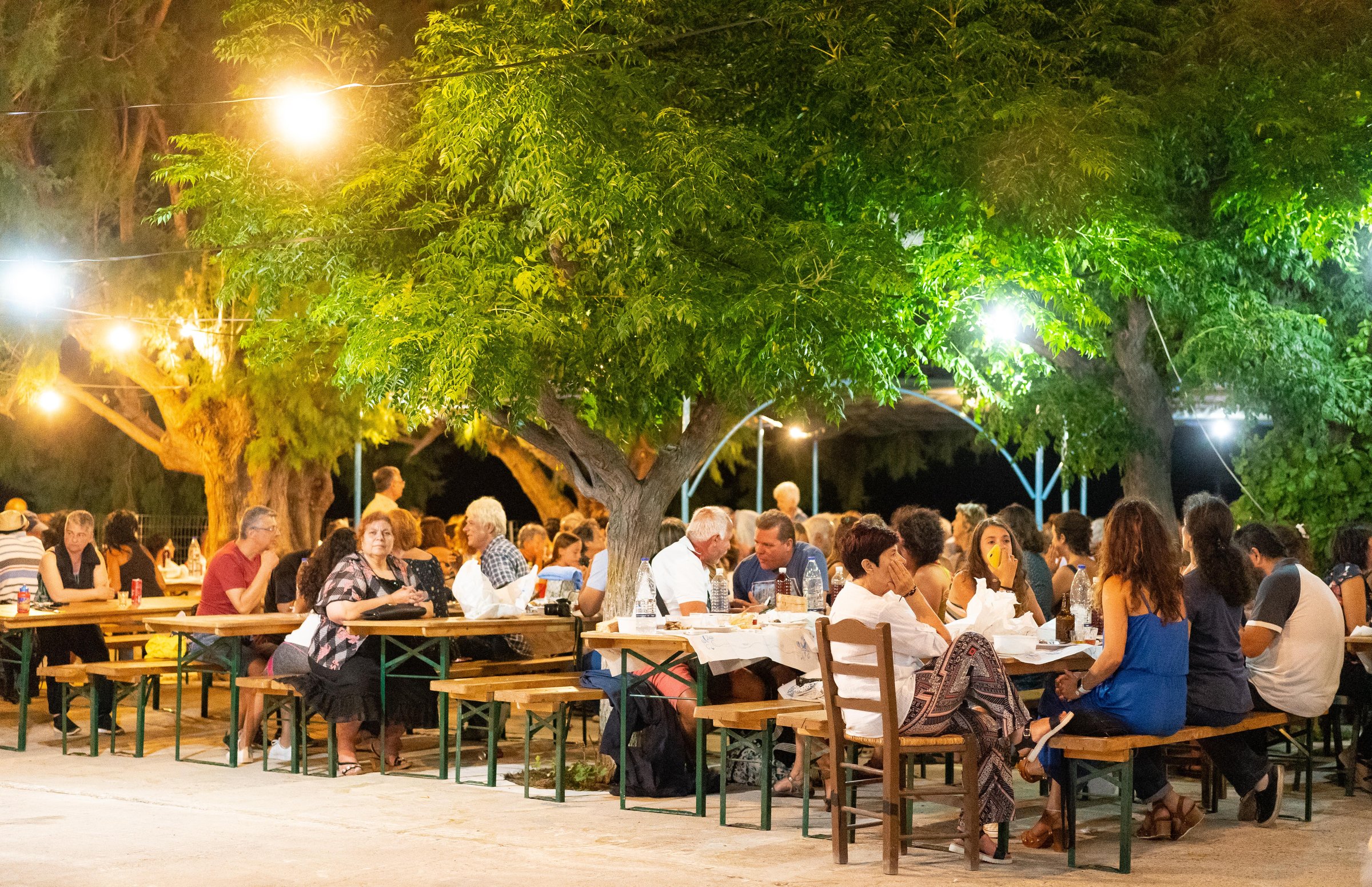
Perhaps the least quantifiable, but most consistently cited, factor is social connection. Ikarians report far lower rates of loneliness and depression than is typical in Western countries — and depression itself is associated with an elevated risk of later dementia. On the island, multi-generational households remain common, neighbors check in on one another as a matter of course, and the island's famous summer festivals, or panigiria, bring entire villages together for nights of food, wine, music, and dancing that can stretch until dawn.
It is easy to read about diet and movement as isolated "tips," but on Ikaria these elements are inseparable from a broader way of life — one in which eating, moving, and connecting with others are not separate categories to be optimized, but simply the texture of daily existence.
Experiencing It for Yourself
For guests staying at Ikarian Endless Blue, a visit to Ikaria offers more than a beautiful seafront setting — it offers a glimpse into a way of life that researchers travel from around the world to study. A morning walk along the coastal paths near Nanouras, a meal built around foraged greens and local olive oil, an afternoon cup of mountain herbal tea on the terrace, an evening at a village panigiri: these are not performances staged for visitors, but everyday Ikarian life, open to anyone willing to slow down and join in.
Our concierge can help arrange introductions to local producers, suggest walking routes used by generations of islanders, and point you toward the seasonal festivals where Ikaria's famously strong sense of community is most visible. Whether or not the benefits researchers link to daily life here follow you home, most guests leave with at least a little more of Ikaria's rhythm in their step.