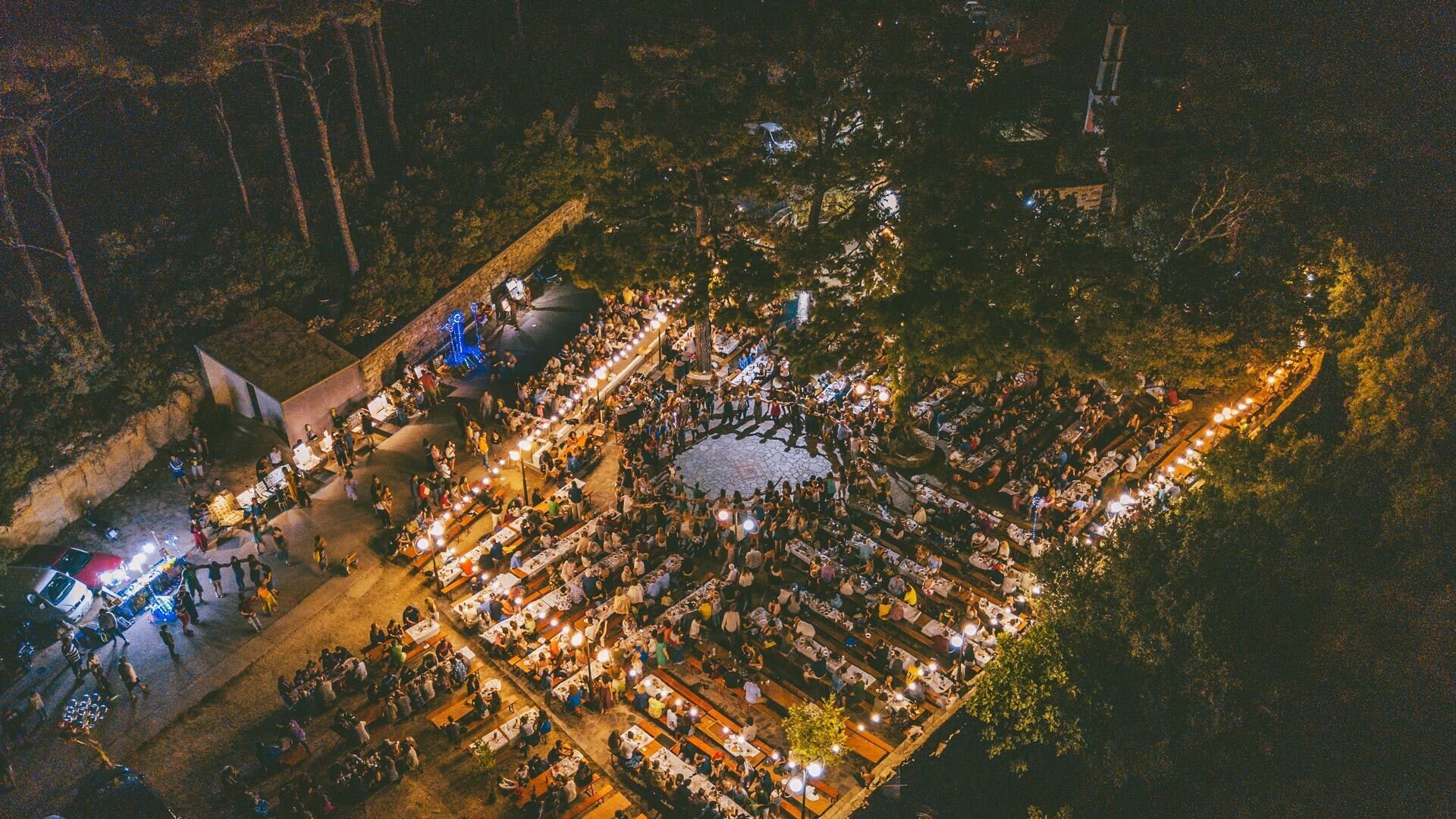
If there is one tradition that captures the spirit of Ikaria more than any other, it is the panigiri — the village festival. Part fundraiser, part feast, part all-night dance party, panigiria are held throughout the warmer months across the island's villages, and for many visitors they become the unexpected highlight of a stay. Locals describe Ikaria as known for its lively atmosphere and famous sense of humor, and nowhere is that more visible than at a summer panigiri, where an entire village — and often visitors from several neighboring villages too — gathers under the trees for a night of food, wine, music, and dancing that can run until sunrise.
Roots in Community Resilience
The modern panigiri tradition has roots that go back to the 1950s and 1960s, a period when Ikaria's villages were largely cut off from state infrastructure funding, partly due to the island's politics at the time. Rather than wait for roads, squares, and water systems to be built by outside authorities, communities organized their own festivals — selling food and wine to raise the funds needed for these projects themselves.
That spirit of collective self-reliance never disappeared. Today, panigiria still function in much the same way: residents volunteer their time and contribute food, wine, and labor, ticket and drink sales cover costs, and whatever surplus remains is reinvested into the village — funding everything from road repairs to community squares and local infrastructure. What began as a practical solution to isolation has become one of the island's most cherished traditions, and a deep expression of the communal bonds that researchers studying Ikaria's longevity often point to as a key ingredient.
A Summer Full of Festivals
During peak season, it's not unusual for several villages to host panigiria on the same weekend — sometimes seven or eight happening simultaneously across the island. The atmosphere is informal and joyful: people nap where they can — on a bench, in a car, in a sleeping bag on the grass — between bursts of dancing, conversation, and music, often returning to the festivities the next morning as if the night had simply paused rather than ended.
Some of the island's best-known panigiria include the feast of Saint Isidoros on May 14th and Saint John's Klidonas on June 24th, both celebrated in Raches; the Dormition of the Virgin Mary on August 15th in Lagkada; the Nativity of the Virgin Mary on September 17th in Monokambi; and Saint Eustathios on September 20th in Arethousa. Many travelers deliberately time their visit to coincide with one of these dates, treating the festival calendar almost like a second map of the island.
The Table: Rasko, Black Broth, and Mutual Support
No panigiri is complete without food, and the dish most associated with these festivals is "rasko" — goat, grilled or slow-boiled, that has grazed freely on the island's herbs and scrub. The name comes from the Ikarian word for "mountainous," a fitting origin for a dish built around animals raised on Ikaria's steep hillsides. Alongside the rasko, the table is simple and traditional: salad, potatoes, local cheese, and bread. Until about thirty years ago, before any of this began, everyone present was served — free of charge — a cup of the rich broth left over from boiling the meat. Older islanders still call it "melanas zomos," the "black broth" once prized by the ancient Spartans for the strength it gave them, and on occasion the table would also include sautéed liver, plus a few sweets to finish. Only after this did the eating, drinking, and dancing properly begin.
Wine and food at a panigiri are not free — everything is sold at reasonable prices, with the proceeds going toward community projects and, just as importantly, toward helping fellow villagers in need. It's this same spirit of mutual support that also gives rise to the "makaronades": informal pasta dinners organized, often at the same venues as the panigiria but on unrelated days and times, specifically to raise money for someone in the community going through a hard time. People come, eat their plate of pasta and whatever else is on the table, and in doing so quietly help a neighbor get back on their feet.
Dancing Until Dawn
As the night deepens, the music shifts toward Ikaria's traditional circle dances — slow, hypnotic, and deeply communal. Locals and visitors join hands in long, winding lines that move to the rhythm of violin, lute, and voice, a tradition passed down through generations. There is no audience at a panigiri; everyone is eventually pulled into the circle, whether they intended to dance or not.
Joining a Panigiri During Your Stay
For guests at Ikarian Endless Blue, attending a panigiri offers a rare chance to experience Ikarian community life from the inside, not as a staged performance but as the real thing — the same celebrations islanders have been holding for their neighbors, and for themselves, for generations. Our concierge keeps track of the summer festival calendar and can point guests toward the panigiria taking place during their stay, along with practical tips: come rested, dress comfortably, and don't be surprised if you end up dancing in a circle of strangers who feel, by the end of the night, a little less like strangers at all.